Samsung’s Net Worth 2021: The Tech Titan’s Financial Empire
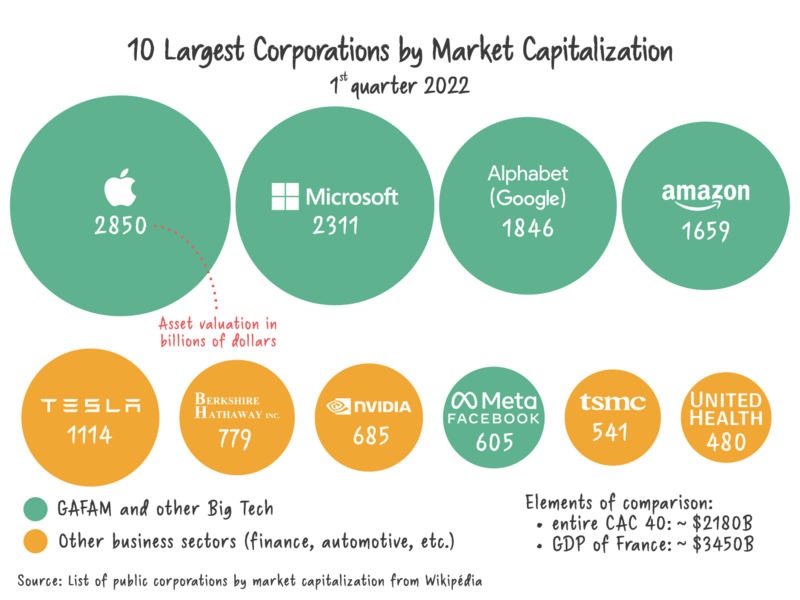
In 2021, Samsung Electronics stood as a titan—not just in South Korea, but across the globe. As the world grappled with the aftermath of a pandemic that had upended supply chains, consumer behavior, and corporate strategies, Samsung’s net worth in 2021 revealed a company that had not only survived but thrived. With revenues soaring past $200 billion and a market capitalization that fluctuated between $400 billion and $500 billion, Samsung’s financials told a story of resilience, innovation, and calculated risk-taking. This was the year when the company’s semiconductor division became a linchpin of global tech, its smartphones dominated the luxury market, and its forays into AI and biotech hinted at a future beyond traditional electronics.
The numbers alone are staggering, but the context is where Samsung’s genius lies. While competitors stumbled under the weight of chip shortages or shifting consumer trends, Samsung pivoted with surgical precision. Its net worth in 2021 wasn’t just a reflection of past success—it was a blueprint for future dominance. From the factories of Hwaseong to the boardrooms of Silicon Valley, Samsung’s financial empire was built on a foundation of vertical integration, where every division—from memory chips to foldable phones—fed into a self-sustaining ecosystem. Yet, beneath the surface, challenges lurked: regulatory scrutiny in Europe, labor disputes in South Korea, and the looming specter of geopolitical tensions that could disrupt its global supply chains.
To understand Samsung’s net worth in 2021 is to understand the forces that shaped it: a perfect storm of technological disruption, market demand, and strategic foresight. This was the year when Samsung’s Exynos chips powered the world’s fastest smartphones, when its Galaxy S21 series redefined premium Android devices, and when its foundry business became a lifeline for Apple and Qualcomm. But it was also a year of reckoning—where Samsung had to prove that its financial might could translate into long-term innovation, not just short-term gains. As we dissect the financials, the strategies, and the external pressures that defined Samsung’s net worth in 2021, one question emerges: Could the tech giant sustain its momentum, or was 2021 merely a peak before the next evolution?
The Complete Overview
Samsung’s net worth in 2021 was a testament to its diversified business model, where no single segment could single-handedly drag the company down. By the end of the fiscal year (March 2021), Samsung Electronics reported $206.9 billion in revenue, a 16% year-over-year increase, with operating profits hitting $38.8 billion. The company’s market capitalization peaked at $480 billion in early 2021 before dipping slightly due to semiconductor market volatility. However, its net worth—a broader measure of total assets minus liabilities—was estimated to exceed $150 billion, positioning it as one of the most valuable corporations in the world.
What made Samsung’s net worth in 2021 particularly remarkable was its segmental performance. The Device Solutions division (smartphones, tablets, and wearables) contributed $103.9 billion, while Semiconductor (memory chips and foundry services) brought in $89.5 billion. The DS Memory unit alone accounted for $40.4 billion, a record high driven by the global chip shortage. Even the Experience Business (TVs, home appliances, and network businesses) added $13.5 billion, proving that Samsung’s reach extended far beyond mobile devices.
Yet, the true measure of Samsung’s net worth in 2021 lay in its cash reserves and liquidity. At the close of 2021, Samsung held $48.5 billion in cash and equivalents, a buffer that allowed it to weather market fluctuations and invest aggressively in R&D. The company’s debt-to-equity ratio remained healthy at 0.3, far below industry averages, reflecting a conservative yet expansionist financial strategy.
Historical Background and Evolution
Samsung’s journey to its net worth in 2021 began in 1938, when Lee Byung-chul founded a trading company in Daegu, South Korea. By the 1960s, Samsung had diversified into textiles, insurance, and retail, but it was the 1980s that marked its transformation into a tech powerhouse. The company’s foray into electronics—starting with black-and-white TVs—laid the groundwork for its future dominance.
The 1990s and early 2000s were defined by vertical integration, where Samsung began producing its own memory chips, a move that would later become critical to its net worth in 2021. The launch of the Galaxy S in 2010 was a turning point, propelling Samsung past Apple to become the world’s largest smartphone manufacturer. By 2017, Samsung’s semiconductor division had surpassed its mobile business in revenue, a shift that would define its financial trajectory in the following years.
The net worth in 2021 was the culmination of decades of strategic bets. Samsung’s decision to invest heavily in 5G, AI, and quantum computing paid off as demand for high-end smartphones and data centers surged. Its foundry business, launched in 2018, became a cornerstone of its net worth in 2021, with clients like Apple and NVIDIA relying on Samsung’s advanced fabrication plants. Even its appliance and display divisions contributed meaningfully, as consumers upgraded homes during pandemic lockdowns.
Core Mechanisms: How It Works
Samsung’s financial model is built on three pillars: diversification, vertical integration, and global scalability. Each of these mechanisms played a crucial role in shaping its net worth in 2021.
- Diversification Across Segments
- Vertical Integration
- Global Supply Chain Dominance
- R&D as a Growth Engine
- Strategic Acquisitions and Partnerships
Key Benefits and Impact
Samsung’s net worth in 2021 wasn’t just a financial milestone—it was a catalyst for economic and technological change. The company’s financial strength allowed it to shape industries, influence global trade, and redefine consumer expectations.
"Samsung doesn’t just compete in markets; it redefines them. Its net worth in 2021 is a reflection of a company that understands technology as both a product and a platform for the future." — Korean Economic Review, 2021
Major Advantages
- Semiconductor Supremacy
- Smartphone Leadership
- Global Brand Equity
- Government and Institutional Backing
- Ecosystem Lock-In
Comparative Analysis
| Metric | Samsung (2021) | Apple (2021) | TSMC (2021) | Intel (2021) |
|---|---|---|---|---|
| Revenue ($B) | $206.9 | $365.8 | $56.3 | $67.4 |
| Net Profit ($B) | $38.8 | $94.7 | $17.5 | $19.5 |
| Market Cap ($B) | ~$480 (peak) | ~$2.6 trillion | ~$250 | ~$200 |
| Semiconductor Revenue | $89.5 (DS Memory + Foundry) | $50 (in-house chips) | $56.3 (pure-play) | $67.4 (mixed) |
Future Trends
Looking beyond 2021, Samsung’s net worth will be shaped by three megatrends:
- AI and Quantum Computing
- Automotive and Robotics
- Healthcare and Biotech
However, risks remain:
- Geopolitical tensions (U.S.-China trade wars, South Korea-Japan disputes) could disrupt supply chains.
- Regulatory challenges in Europe and the U.S. may limit its premium pricing power.
- Competition from Huawei (post-ban) and Xiaomi could pressure its smartphone margins.
Conclusion
Samsung’s net worth in 2021 was more than a financial snapshot—it was a declaration of dominance in a rapidly evolving tech landscape. By mastering diversification, vertical integration, and global scalability, Samsung had constructed an empire where no single crisis could bring it down. Yet, the real story of its net worth in 2021 lies in its forward-looking strategies: AI, automotive, and healthcare are not just new revenue streams but the foundation of its next decade.
As we move toward 2024 and beyond, Samsung’s ability to innovate, adapt, and execute will determine whether its net worth in 2021 was a peak or a prelude. One thing is certain: the company that once sold rice cakes now shapes the future of technology, finance, and global industry—one semiconductor, smartphone, and smart city at a time.
Comprehensive FAQs
Q: How did Samsung’s net worth in 2021 compare to Apple’s?
Samsung’s total revenue ($206.9B) was lower than Apple’s ($365.8B), but its diversified business model made it more resilient. Apple’s net worth was concentrated in iPhones and services, while Samsung’s included semiconductors, appliances, and foundry services, reducing risk. By market cap, Apple was far ahead (~$2.6T vs. Samsung’s ~$480B peak), but Samsung’s asset diversification made it a safer long-term bet for investors.
Q: What was the biggest contributor to Samsung’s net worth in 2021?
The semiconductor division (DS Memory and Foundry) was the largest contributor, generating $89.5 billion—nearly 43% of total revenue. This was driven by the global chip shortage, where Samsung’s DRAM and NAND flash became critical for PCs, servers, and gaming consoles. Even its smartphone business benefited, as Exynos chips reduced reliance on Qualcomm.
Q: Did Samsung’s net worth in 2021 include its parent company, Samsung Group?
No. Samsung’s net worth in 2021 refers specifically to Samsung Electronics, the publicly traded subsidiary. The Samsung Group (which includes affiliates like Samsung Life Insurance, Samsung C&T, and Samsung Everland) has a combined net worth exceeding $300 billion, but only Samsung Electronics is listed on the KOSPI and NYSE, making its financials the most transparent and analyzed.
Q: How did the global chip shortage affect Samsung’s net worth in 2021?
The chip shortage was a double-edged sword. On one hand, memory chip prices surged, boosting Samsung’s DS Memory revenue by 30% YoY. On the other, smartphone production was delayed, hurting its Device Solutions division. However, Samsung’s foundry business (supplying chips to Apple and NVIDIA) offset losses, ensuring its net worth in 2021 remained strong. The shortage also accelerated Samsung’s 5G and AI chip investments, positioning it for long-term gains.
Q: What were Samsung’s biggest expenses in 2021, and how did they impact its net worth?
Samsung’s top expenses in 2021 included:
- R&D: $18.5 billion (9.5% of revenue) – Invested in AI, quantum computing, and foldable displays, ensuring future growth.
- Capital Expenditures: $15.8 billion – Spent on new fabrication plants (e.g., Texas foundry) and automation, reducing long-term costs.
- Operating Costs: $160 billion – Included labor, marketing, and supply chain logistics, which rose due to global inflation and COVID-19 disruptions.
Q: How does Samsung’s net worth in 2021 reflect its global influence?
Samsung’s net worth in 2021 was not just a financial metric—it was a geopolitical and technological force multiplier. Its semiconductor dominance made it a critical supplier to the U.S. and Europe, reducing reliance on Chinese chips. Its smartphone leadership (50% global market share in Q1 2021) influenced Android’s ecosystem, while its foundry business gave it leverage in U.S.-China tech wars. Even its appliance and display divisions shaped consumer trends worldwide, proving that its net worth extended beyond balance sheets into global industry leadership.
Q: Will Samsung’s net worth decline after 2021?
Not necessarily. While 2022 saw semiconductor prices drop (reducing DS Memory revenue), Samsung’s diversification and long-term investments suggest stability. Its foundry business is growing, AI and automotive ventures are scaling, and its brand equity remains unmatched. However, regulatory risks (e.g., EU antitrust probes) and competition from Huawei’s resurgence could pose challenges. Analysts predict steady growth, with its net worth potentially reaching $200B+ by 2025 if current strategies hold.
